11. March 2026
Double Indemnity 82 Years Later
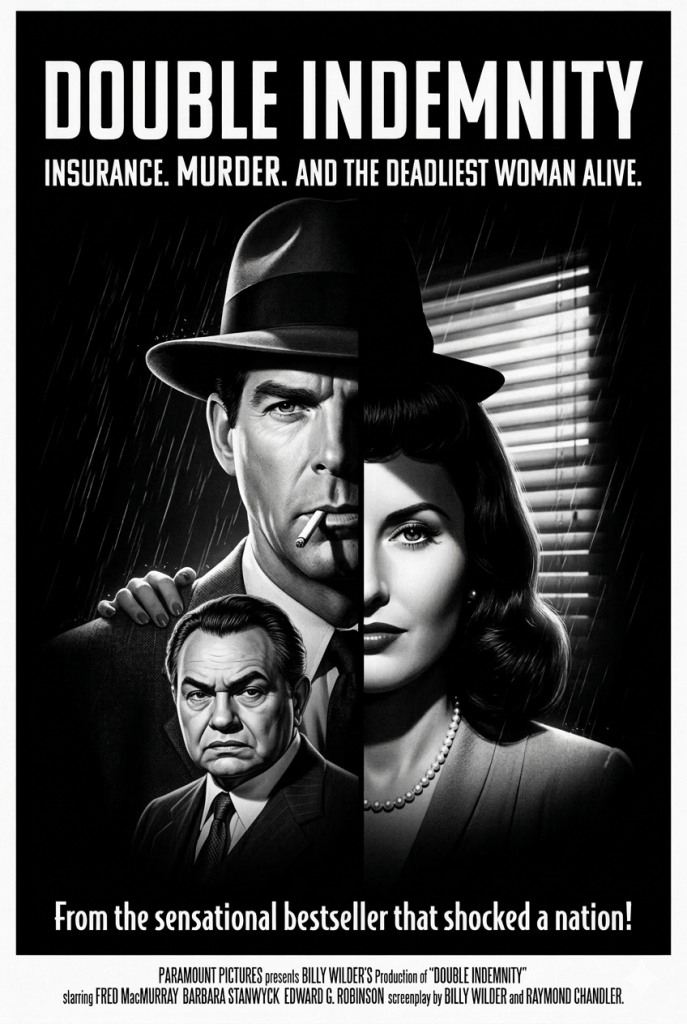
Why Billy Wilder's Double Indemnity Is Still a Masterpiece 80 Years Later
Some movies don't just fit into a genre, they create it. Billy Wilder's 1944 film Double Indemnity is the definitive blueprint for film noir. You can see its influence in scores of movies if you watch it today, but few imitators ever managed to quite capture its perfect blend of smart dialogue, icy cynicism, and that sense of looming doom weighing down every single moment.
A Simple, Deadly Plan Driven by Greed
The story is deceptively simple: Walter Neff (Fred MacMurray), an insurance salesman, makes a house call and meets Phyllis Dietrichson (Barbara Stanwyck). Instantly, he's corrupted-hooked on her dangerous charm and a plot to murder her husband for the insurance money.
This isn't some high-octane thriller; it's a slow, agonizing character study. The real suspense comes from watching these two ordinary people justify one awful decision after another until they've dug a hole they can't climb out of. Wilder, with Raymond Chandler adapting James M. Cain's novel, sets up the whole film as Walter's final, doomed confession. Because we know the main character is going to crash, the tension lies entirely in watching the slow, step-by-step collapse of their plan and their relationship.
Three Iconic Performances
But what really makes this movie unforgettable is the casting:
* Fred MacMurray (Walter Neff): The casting of MacMurray-who was primarily known for playing nice, kindly "good guy" roles at the time-was brilliant. It makes Walter's rapid descent much more unsettling. He's not a bad man-he's just weak, vain, and far too easily tempted. MacMurray perfectly captures the anguish of a regular guy who thinks he can stop his own slide into disaster but just keeps going.
*Barbara Stanwyck (Phyllis Dietrichson) *: She is the ultimate femme fatale. Phyllis is terrifying because she's so cold and focused. She knows exactly what she wants, and she's utterly ruthless about getting it. While flashes of real emotion sometimes break through, they only make her scarier.
Edward G. Robinson as Barton Keyes: Robinson all but steals the movie as Walter's friend and co-worker, the incorruptibly honest investigator of suspicious claims. The actor brings real heart to what could easily have been a rather generic detective character, as well as a keen, even obsessive mind. The deep trust between Keyes and Walter makes Walter's betrayal crushingly heavy.
Deeper Themes: Beyond the Crime
What makes Double Indemnity endure isn't just its murder plot but the social commentary:
* The Emptiness of the American Dream: Walter and Phyllis are not desperate, starving criminals. They are bored, comfortable middle-class Americans who are restless and hungry for more, even when they have everything they "should" want. Perfectly captured is the idea that their comfortable lives aren't enough, which leads them to reckless, criminal choices just to feel something real.
* The System as a Metaphor: The insurance scheme itself is a masterstroke. In trying to scam a system designed to protect people, it reflects their moral breakdown. They start to see human life as a number on a form, as if their own jobs have subconsciously prepared them to devalue it.
Lust, Not Love: The word "romance" should be forgotten. Their relationship is a strictly transactional one, mixing lust and mutual greed in a volatile way. Barely trusting each other, the only thing holding them together is the thrill of breaking the rules, and once that fades, there’s nothing left.
Where It Shows Its Age
No movie can be completely timeless, and Double Indemnity certainly has a couple of moments.
* Pacing: Some of those middle sections, heavy in alibi and logistics, can feel a bit slow or "draggy" compared with today's fast-cut thrillers. However, if you let it, that steady, slow-burn pace creates a great sense of inescapable, increasing tension.
* The Femme Fatale Trope: During that era, although progressive, Phyllis still managed to be written as a figure of the "dangerous woman" No background and motivation for her; she remains mostly one-dimensional and driven by Walter's fears and desires, as compared to the male protagonists who were more developed.
Which other classic film noir would you like to compare Double Indemnity to?